There are sports you try once and remember fondly. And then there are sports that rewire your brain.
Kitesurfing belongs firmly in the second category. It doesn’t just ask for your attention—it demands obsession.
Riders talk about wind forecasts the way others talk about stock markets. They plan vacations around tides. They replay sessions in their minds long after the sun sets. This isn’t accidental. Kitesurfing is engineered by nature itself to be irresistibly addictive.
The Rare Sensation of True Three-Dimensional Movement
Most sports confine the body to a single plane. Running moves forward. Surfing stays horizontal. Even snowboarding, for all its freedom, is tied to gravity and terrain. Kitesurfing breaks that limitation. The moment the kite lifts, movement becomes three-dimensional. You are no longer just gliding across water—you are carving space.
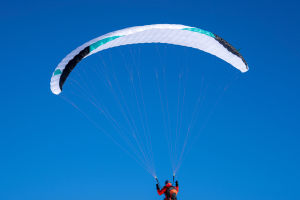
This vertical element changes everything. A properly timed jump doesn’t feel like leaping; it feels like being suspended. Riders describe moments of silence mid-air, when the pull of the kite perfectly balances body weight. That sensation—floating rather than falling is neurologically powerful. The brain interprets it as both flight and control, a combination few human activities can offer.
Wind as a Partner, Not an Opponent
What separates kitesurfing from many extreme sports is its relationship with the environment. Wind isn’t an obstacle to overcome; it’s a collaborator. Every session is a negotiation between rider and atmosphere. Wind direction, strength, gust patterns, and thermal shifts all matter. Experienced riders don’t just “feel” the wind—they read it.
This constant interaction keeps the mind fully engaged. Unlike repetitive gym routines or predictable playing fields, no two sessions are identical. The variability prevents mental saturation, one of the main reasons people abandon hobbies. In kitesurfing, mastery is never complete. There is always a new condition to understand, a new adjustment to make, a better line to ride.
A Sport That Rewards Precision Over Force
Contrary to popular belief, kitesurfing is not about brute strength. It’s about timing, efficiency, and micro-decisions. Pull too hard, and the kite punishes you. React too late, and the board slips away. Progress comes from refining technique, not overpowering the elements.
This precision-based learning curve is deeply addictive. Small improvements lead to noticeable gains—higher jumps, smoother landings, cleaner transitions. Neuroscience shows that activities offering clear feedback loops trigger dopamine more consistently. Kitesurfing delivers that feedback in real time, every second you’re on the water.
The Psychological Shift: Total Presence
Few sports force mindfulness the way kitesurfing does. When you’re riding, distraction isn’t an option. Wind changes demand immediate response. Water texture signals what’s coming next. Your kite position must be constantly monitored. This level of required presence shuts out everything else—work stress, notifications, background anxiety.
Progression Without a Ceiling
One of the most compelling aspects of kitesurfing is its endless progression. Beginners focus on staying upwind. Intermediate riders chase jumps and transitions. Advanced athletes explore unhooked tricks, megaloops, wave riding, or hydrofoiling. Each discipline feels like a new sport layered onto the same foundation.
This modular progression prevents stagnation. When motivation dips in one area, another path opens. Flat-water freestyle one day, wave riding the next. Few sports offer such diversity without requiring entirely new equipment or environments.
A Global Culture Bound by Wind
Kitesurfing is also uniquely global. Wind corridors connect distant coastlines into a shared culture. Riders from different countries speak the same technical language—knots, lines, trim. Beaches become temporary communities where skill level matters less than respect for conditions.
This social dimension strengthens the addiction. Sessions are shared experiences, discussed afterward in detail. Gear choices, weather calls, and near-misses become stories. The sport doesn’t end when you leave the water—it continues in conversations, planning, and anticipation.
Risk That Sharpens, Not Recklessness That Consumes
Kitesurfing involves risk, but it’s calculated risk. Modern safety systems, training standards, and spot knowledge have transformed the sport into one where awareness matters more than fearlessness. Riders who last are not reckless—they are attentive.
This balance heightens engagement. The brain responds strongly when the stakes are real but manageable. Too safe, and boredom sets in. Too dangerous and stress dominates. Kitesurfing lives in that narrow, thrilling middle zone.
Why People Never Truly Quit
Many people take breaks from kitesurfing—life intervenes, injuries happen, wind disappears—but quitting permanently is rare. The sport imprints itself. The first time you edge hard against strong wind, the first controlled jump, the first long glide back to shore—those moments linger.
Kitesurfing doesn’t just offer excitement. It offers a reminder of what the human body can feel when physics, focus, and freedom align. And once you’ve tasted that alignment, calm water and steady wind start calling you back—quietly at first, then louder—until you answer again.